Project execution system
A plant is delivered through controlled interfaces, verified work and a clear route from design approval to operational handover.
Our delivery framework connects engineering documents, procurement status, site progress, quality records and commissioning systems so that project information remains usable.
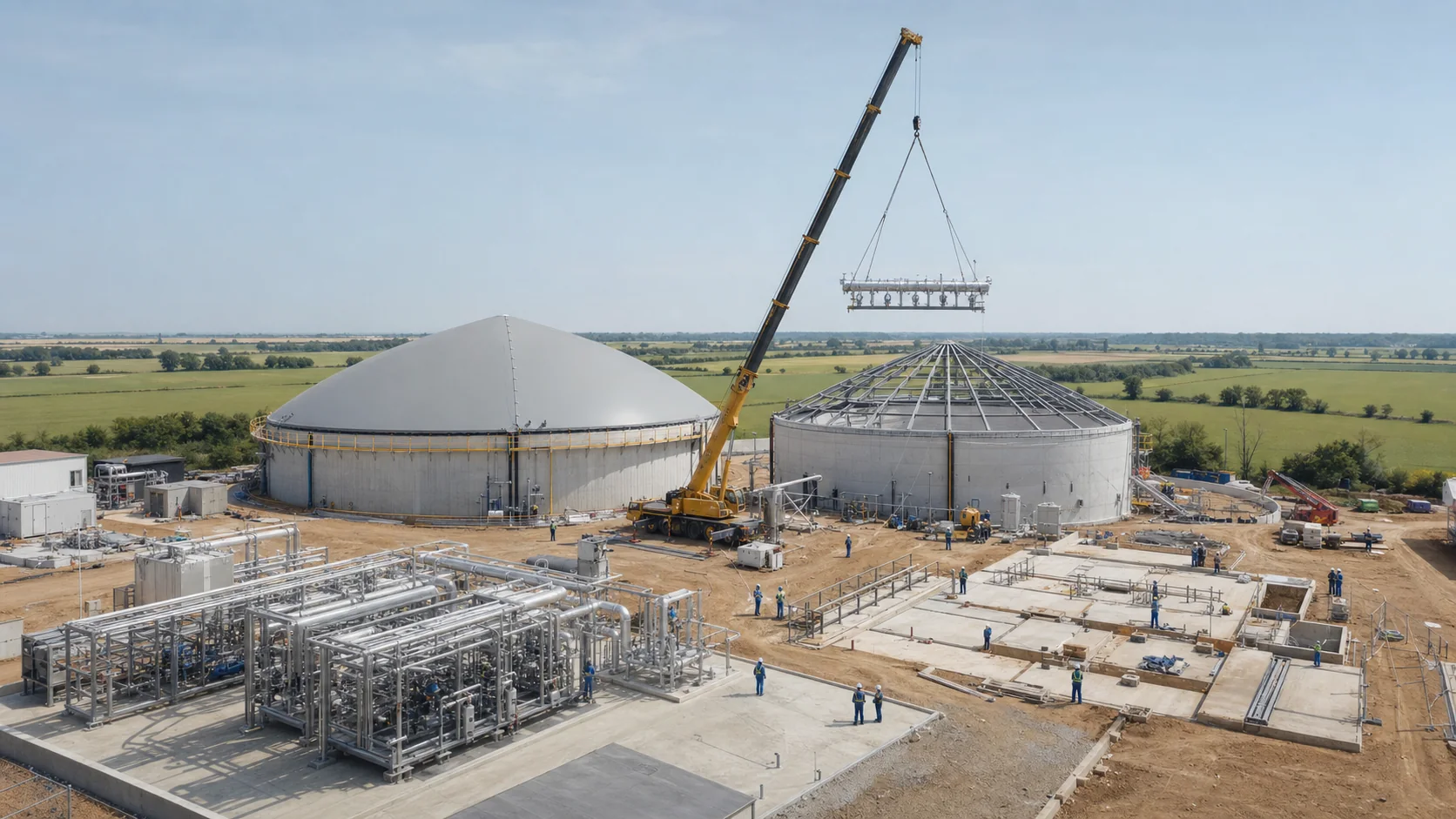
Representative project imagery; project controls and site methods are adapted to local requirements.
Stage-gated delivery
Close the right questions in the right order.
Each stage has defined inputs and outputs. This protects later procurement and construction decisions from unresolved front-end assumptions.
Design basis, feedstock envelope, product specification, site data, battery limits, contracting strategy and owner requirements.
Approved process documents, equipment data, model and layout coordination, civil loads, electrical loads and control philosophy.
Issued-for-construction information, approved vendors, inspection plans, site logistics, temporary works and installation sequence.
Mechanical completion by system, test records, punch status, energisation controls and commissioning procedures.
Stable operating conditions, agreed test basis, operator training, documentation, spares and outstanding-action register.
Project controls
Make status and responsibility visible.
Simple, disciplined controls allow the project team to act before technical issues become site delay.
Schedule & interfaces
Engineering, vendor, civil and installation dependencies linked to common milestones and accountable owners.
Document control
Reviews, revisions, approvals and construction status managed so the site works from current information.
Quality assurance
Inspection and test plans, hold points, non-conformance control and turnover records structured by system.
Change management
Design and site changes assessed for process, safety, cost, schedule, documentation and commissioning impact.
Owner inputs
Information we need to move quickly.
Early access to reliable project data shortens definition and prevents unnecessary assumptions.
Quantity & characteristics
Daily and seasonal availability, composition, dry matter, contaminants, storage needs and available laboratory data.
Gas specification & use
Grid standard, compression pressure, industrial user requirements, CHP basis or other delivery conditions.
Land, utilities & constraints
Topographic and geotechnical data, plot limits, access, power, water, drainage, heat and environmental constraints.
Permits, stakeholders & dates
Approval status, external interfaces, financing milestones, required start-up date and preferred contracting model.